The Only Begotten Son and the Firstborn from the Dead
Article #1
The most famous verse in the Bible, John 3:16, identifies only one Man to be the Only Begotten Son of God. This beautiful verse resonates in our hearts. We know it to be true! But what does it mean? I’m asking specifically about the title given to Jesus Christ. When and how was Jesus Christ uniquely “begotten” by the Father? And how did this event “only” happen to Him? All Christians should be motivated to know the glorious details of John 3:16. These questions are particularly interesting because we know that the second Person of the Godhead, the Son of God, is an uncreated and eternal Person.
The Incarnation Required a Unique Birth
The title, the Only Begotten Son of God, refers to the incarnation of the uncreated and eternal Son of God when He was born into this world as a Man in the form of Jesus Christ. Matthew and Luke took the time to tell readers about how Jesus was “conceived” miraculously by “the Holy Ghost” in Mary’s womb and brought to birth (Matt. 1:20, Lk. 1:35; Jn. 18:37, Isa. 7:14). Having no earthly father, it can be correctly stated that God was Jesus Christ’s one and “only” Father by birth. John doesn’t give us a conception and birth story in the Gospel of John. But he respectfully refers to it four times by using the title, the Only Begotten Son of God, in John 1:14, 18, 3:16, 18. He refers to it five times if you count 1 John 4:9.
the Only Begotten of the Father
the Only Begotten Son
John eloquently gives us a conception story in his own way in John 1 and John 3. He shows us the divinity of the Son of God as an uncreated, eternal, and heavenly being (Jn. 1:1-5, 18), and then emphatically declares the good news that the Son of God has “come into the world” when “the Word was made flesh, and dwelt among us, (and we beheld His glory, the glory as of the Only Begotten of the Father,) full of grace and truth” (Jn. 1:9-18). In order for an uncreated, eternal, and heavenly being to be incarnated, this Person must come down from Heaven. Right? Speaking of this, John said that God “sent” His Son “into the world” (Jn. 1:17-18, 1 Jn. 4:9), and thus the Son of God “came down from Heaven” in a real and genuine earthborn incarnation (Jn. 1:13).
Only BegottenSon
the Only Begotten Son of God
I tremble to hear Jesus Christ say to the Father, “Sacrifice and offering Thou wouldest not, but a Body hast Thou prepared Me” (Heb. 10:5; Ps. 40:6-8). God became a Man through the incarnation so that He might die the death of the crucifixion! In other words, this Person became “the Only Begotten Son” for the purpose of being “lifted up” by the Cross (Jn. 1:13-16). Specifically speaking, this is how God “gave” this Person as a gift to the world, thus making Him “the Only Begotten Son of God” (Jn. 1:17-18, 8:42, 18:37). He was given to the world that He might deliver us from it (Gal. 1:4, 6:14).
The Resurrection of Jesus Christ was a Unique Rebirth
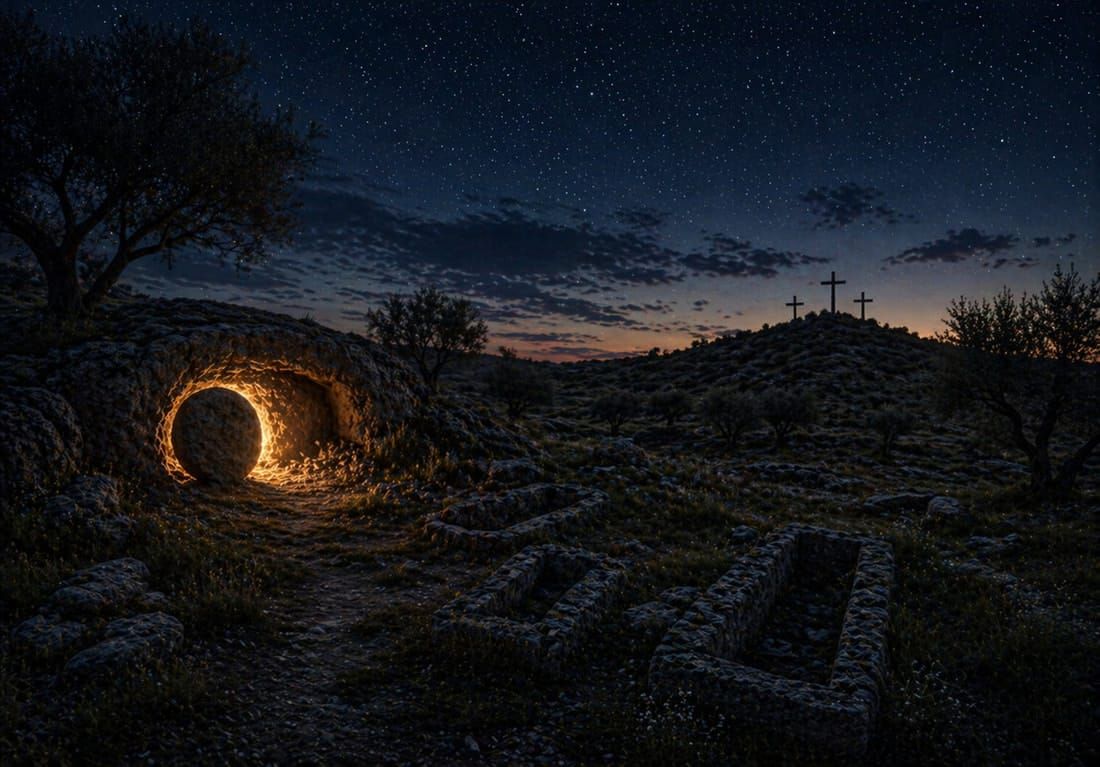
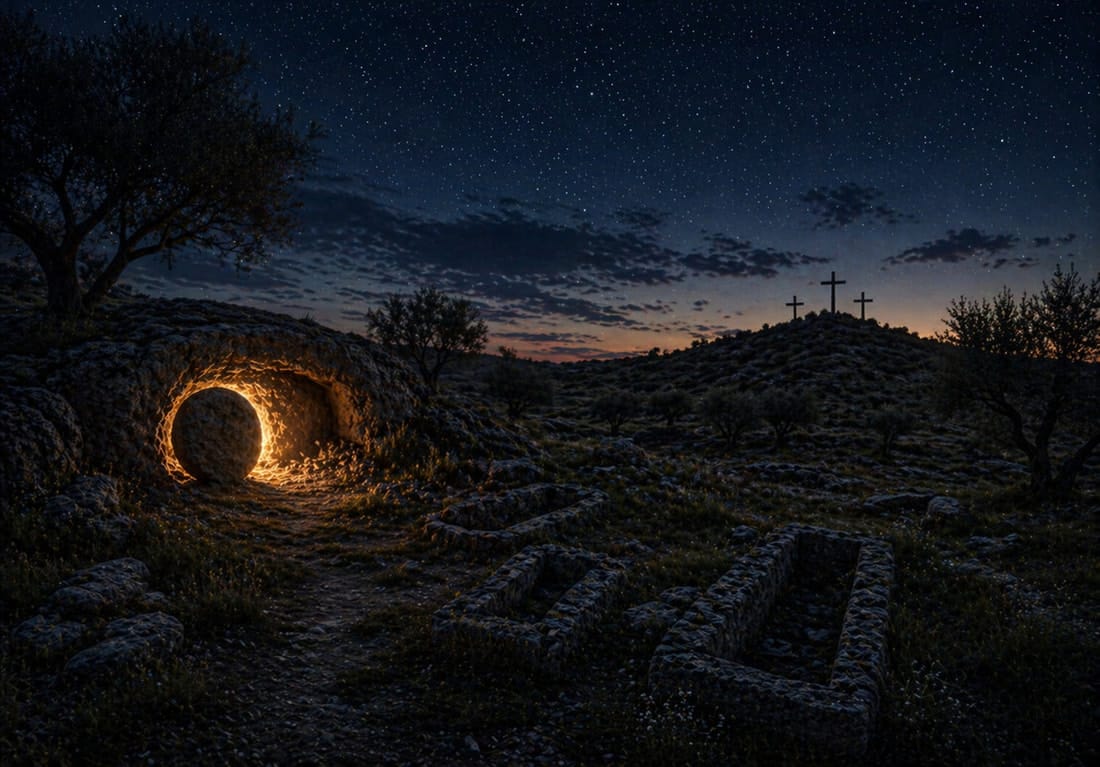
Jesus Christ was uniquely begotten of the Father through the incarnation. We know when and how this happened according to the Bible. Nevertheless, the Scripture also speaks of another birth. When and how did this one happen? On a very specific day – Resurrection Sunday! – a thousand-year-old prophecy was fulfilled, which said, “Thou art My Son, this day have I begotten Thee.” (Acts 13:33, Ps. 2:6-7). The titles used to commemorate this event are: “the First Begotten of the Dead” (Rev. 1:5) and “the Firstborn from the Dead” (Col. 1:18). The resurrection of Jesus Christ was a unique and unprecedented rebirth.
the First Begotten of the Dead
the Firstborn from the Dead
I don’t need to provide a detailed explanation about what this unique title means. The apostles explained this for us as they preached the Gospel in the Book of Acts; most notably, Paul quoted Psalm 2:6-7 in Acts 13:29-39 as he was preaching in the synagogue of Antioch in Pisidia.
the Treesepulchreraisedglad tidingsraisedupThou art my Son, this day have I begotten thee.raisednow no more to return to corruption
Thou art my Son; this day have I begotten thee
Theoretically, without Acts 13, most theologians would likely interpret Psalm 2:7 as the day of incarnation for the Son of God. Nevertheless, under inspiration, the apostle Paul interpreted Psalm 2:7 differently. He boldly declared the good news that Psalm 2:7 was fulfilled when God “raised up Jesus again” in fulfillment of Psalm 2:7 – declaring the resurrection day to be yet another birth for the Only Begotten Son of God. Notice also how Romans 1:4 sheds light on the prophecy, “Thou art My Son” (Ps. 2:7). Paul said that Jesus Christ was “declared to be the Son of God with power, according to the spirit of holiness, by the resurrection from the dead” (Rom. 1:3-4).
Several people were raised from the dead in biblical history, even in the Old Testament. But what happened to Jesus Christ was unique and unprecedented. Elijah and Elisha performed miracles of resurrection, but then these people lived out their days and died again even after they were resurrected (1 Kg. 17:17-24, 2 Kg. 4:32-37, 2 Kg. 13:20-21). The same could be said about Lazarus and everyone else who was raised from the dead by Jesus Christ during His earthly ministry (Lk. 7:11-17, Matt. 9:18-26, Jn. 11:1-44). All these people died and were buried, and their dead bodies will remain thus until the 1st resurrection, which will take place at the second coming of Christ (Rev. 20:5-6).
and that he should be the first that should rise from the dead
Jesus Christ was “the first” Man to be raised from the dead in a glorified, indestructible, and eternal human body (Acts 26:23; 1 Cor. 15:20, 23; 2 Tim. 1:10, 1 Cor. 15:54). Death was abolished from the body of Jesus Christ making it impossible for Him to die anymore (2 Tim. 1:10, Rom. 6:9), and yet with the same body our Lord was eating and drinking with some human normalcy in the presence of the apostles (Lk. 24:36-45). Granted, there are many mysteries to this glorification. Some things simply cannot be understood (1 Jn. 3:2, Lk. 20:35-37). But we are supposed to see what is happening here in the grand scheme of condemnation and salvation.
Condemnation can be traced back to Adam in the Garden of Eden. Adam’s sin brought a fallout of inescapable consequences for all mankind, especially as it pertains to spiritual, physical, and eternal death being imposed upon sinners (Gen. 2:17, 3:22-24, Rom. 5:12-14, Mat. 10:28, Rev. 20:14, 21:8). This was an unsolvable problem until the Son of God appeared in the fulness of times (Eph. 1:10). Now, as of 2,000 years ago, the eternal and uncreated Son of God became a Man, affectionately called, “the Only Begotten Son” (Jn. 3:16), thus introducing a second Adam into the Family Tree of humanity.
MandeathManresurrectionAdamdieChristalive
Salvation can be traced back to the coming of a second Adam. The downstream effect of the second Adam is the exact opposite of the first Adam (Rom. 5:12-21). The second Adam has come to undo what was done by the first Adam. God-incarnate was on a rescue mission to recover humanity, while knowing full well what it would require: the incarnation, death, burial, descension, resurrection, and ascension of Jesus Christ (1 Cor. 15:21-22, 45-49). The resurrection of Jesus Christ has reconstituted the Family Tree of humanity, and the ascension will reposition it in Paradise. In a physical sense, the resurrection is a kind of new birth for mankind (Acts 13:32-33, Ps. 2:6-7, Col. 1:18; Rev. 1:5). This is why Jesus Christ was repeatedly called, “the Firstborn from the Dead” (Col. 1:18, Rev. 1:5). In “the regeneration” of “the body” everyone will understand these mysteries perfectly (Matt. 19:28, Lk. 20:35-37, Rom. 8:18-23, 1 Cor. 15:45-49).