The Smallest Unit of Life is one of the Most Complex Entities in the Universe
Article #5 on Atheism
(Author: Preethi David Morris, PhD Researcher)
Atheism Dies Under an Electron Microscope
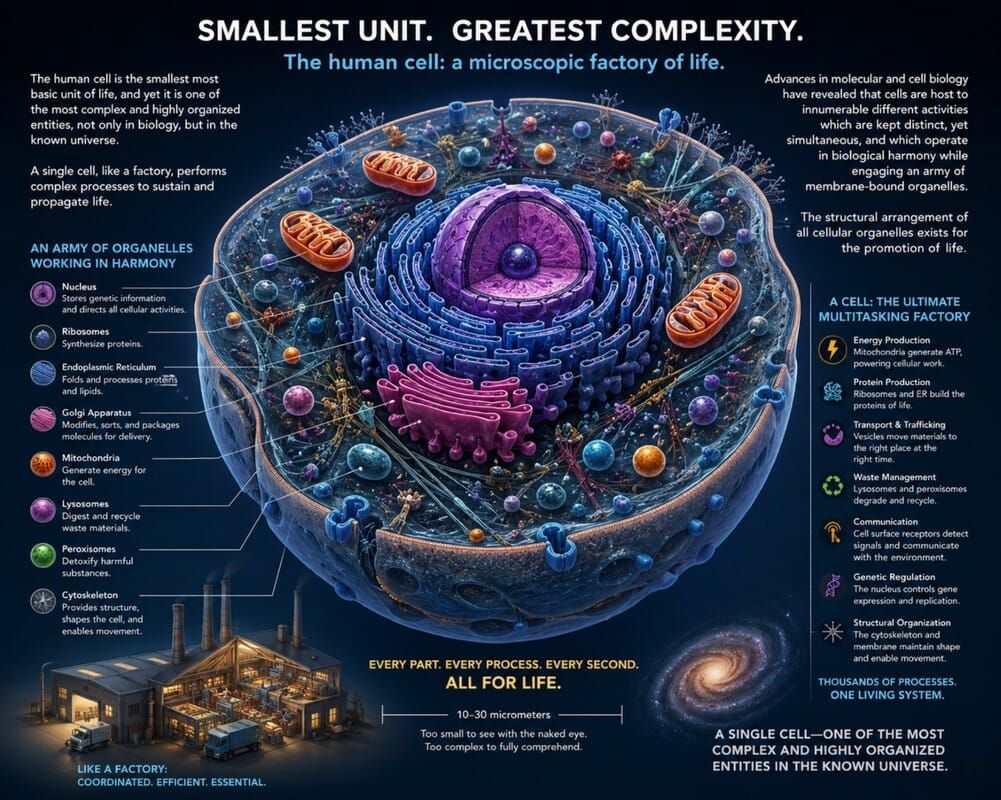
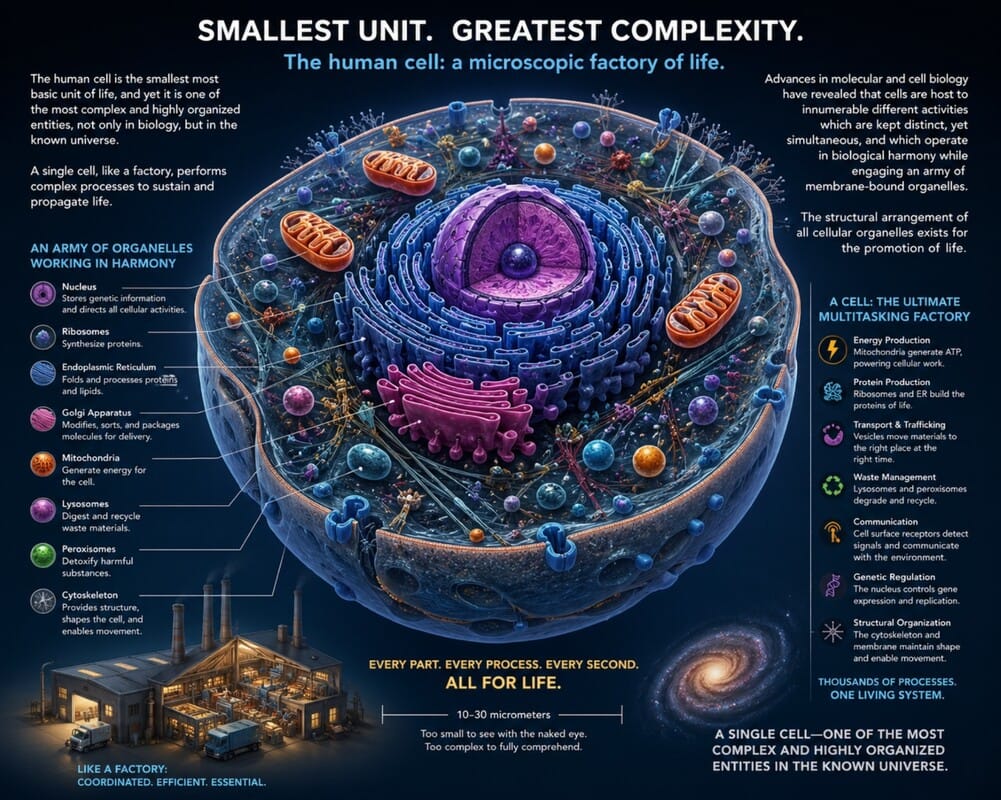
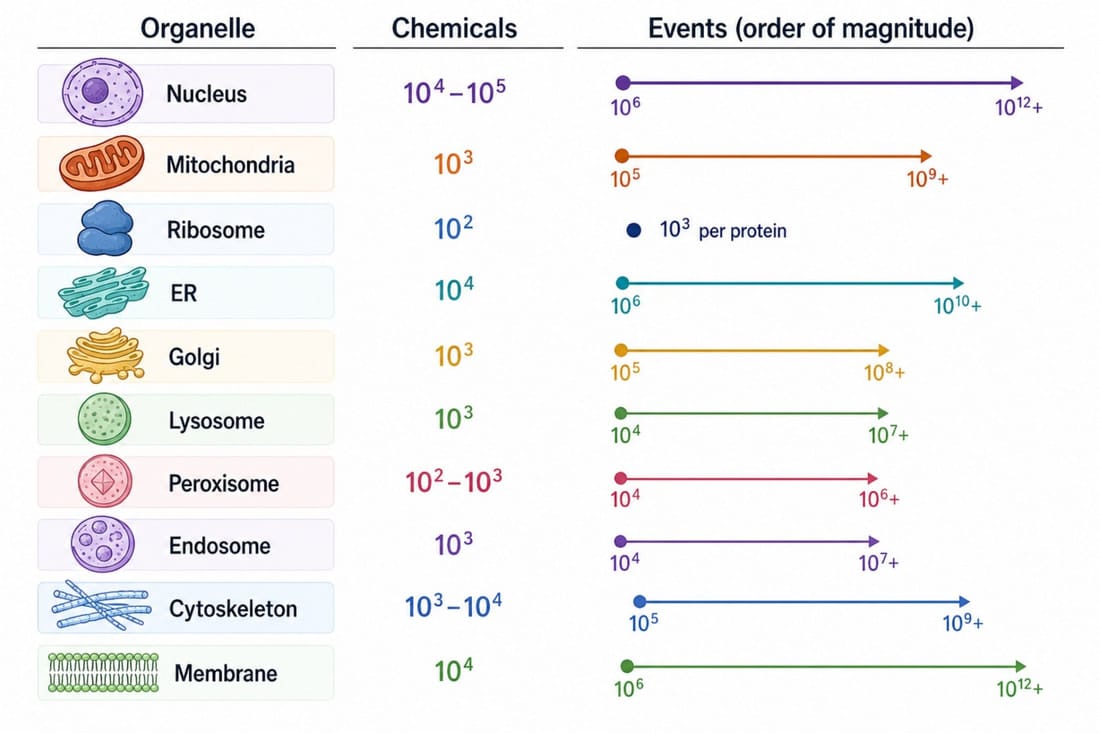
The human cell is the smallest and most basic unit of life, and yet it is one of the most complex and highly organized entities, not only in biology, but in the known universe. A single cell, like a factory, performs complex processes to sustain and propagate life. Advances in molecular and cell biology in recent decades have revealed that cells are host to innumerable different activities which are kept distinct, yet simultaneous, and which operate in biological harmony while engaging an army of membrane-bound organelles. The structural arrangement of all cellular organelles exists for the promotion of life. According to the known levels of amplification in molecular cellular biology, it is estimated that there are trillions of events occurring at any given time in a single human cell! Only an omniscient intelligent Designer can create a cell with so many diverse and complex moving parts on a molecular level, and situate it in a world of interacting cells, tissues, organs, and creatures.
"I will praise thee; for I am fearfully and wonderfully made: marvelous are thy works; and that my soul knoweth right well." - Ps. 139:14
The Nucleus & the Proteome
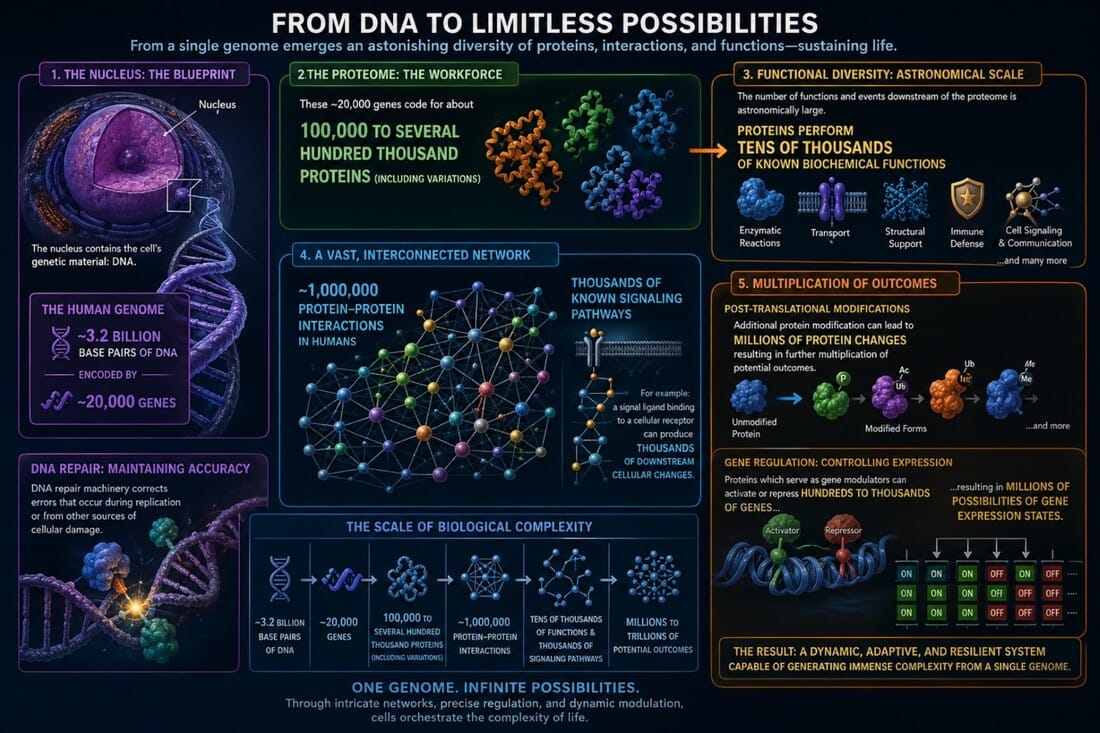
The nucleus contains the cell’s genetic material, DNA. The human genome contains approximately 3.2 billion base pairs of DNA, which encode 20,000 genes. These approximately 20,000 genes code for about 100,000 to several hundred thousand proteins (including variations), known as the proteome. The number of functions and events downstream of the proteome is astronomically large. The proteome branches out to efficiently perform tens of thousands of known biochemical functions. There are an estimated 1,000,000 protein-protein interactions in humans, and thousands of known signaling pathways. For example, a signal ligand binding to a cellular receptor can produce thousands of downstream cellular changes. Additional protein modification can lead to millions of protein changes resulting in further multiplication of potential outcomes. Furthermore, proteins which serve as gene modulators can activate or repress hundreds to thousands of genes resulting in millions of possibilities of gene expression states. DNA repair machinery corrects errors that take place during replication or from other sources of cellular damage.
Are not two sparrows sold for a farthing? and one of them shall not fall on the ground without your Father. But the very hairs of your head are all numbered
Mitochondria
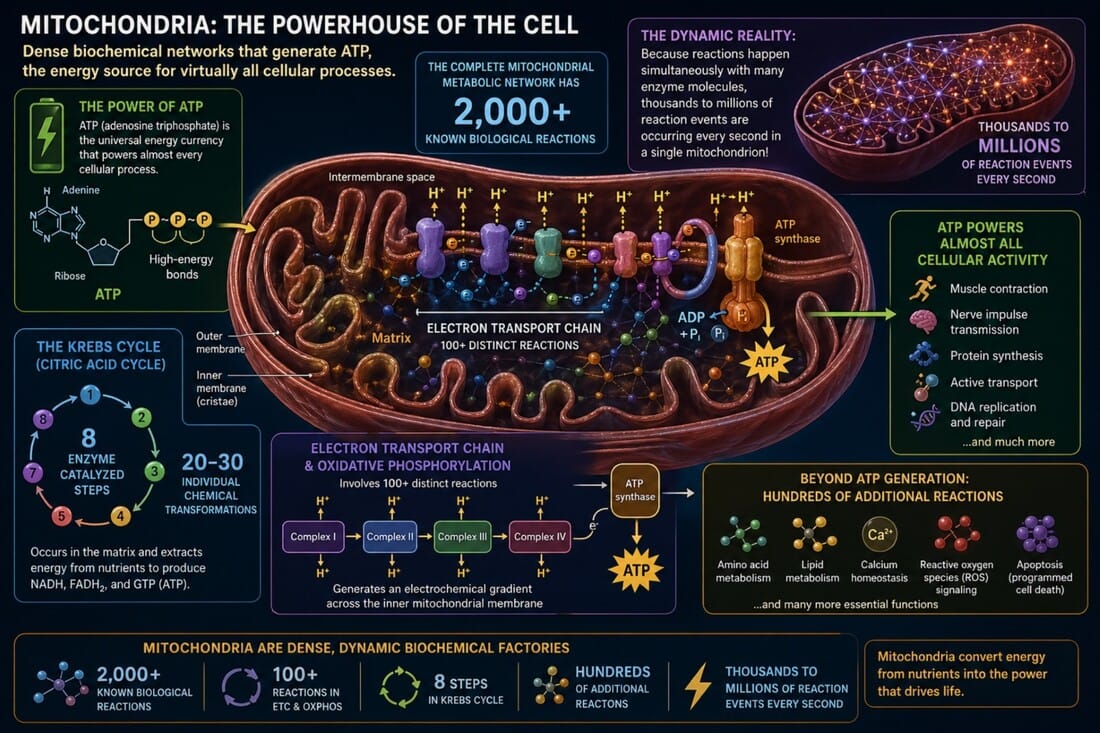
Mitochondria are dense biochemical networks that generate adenosine triphosphate (ATP), the energy source for virtually all cellular processes. Often known as the “powerhouse of the cell”, mitochondria feature core reactions as part of the Krebs cycle, which involves 8 enzyme-catalyzed steps, and 20-30 individual chemical transformations. The electron transport chain and oxidative phosphorylation involve 100+ distinct reactions. Beyond ATP generation, mitochondria perform hundreds of additional reactions. For example, ATP synthase, an enzyme in the mitochondrial membrane converts electrochemical gradients into ATP, which powers almost all cellular activity. The complete mitochondrial metabolic network has 2,000+ known biological reactions. Because reactions are happening simultaneously with many enzyme molecules, the dynamic reality is that thousands to millions of reaction events are occurring every second in a single mitochondrion!
Molecular Machinery: other Organelles
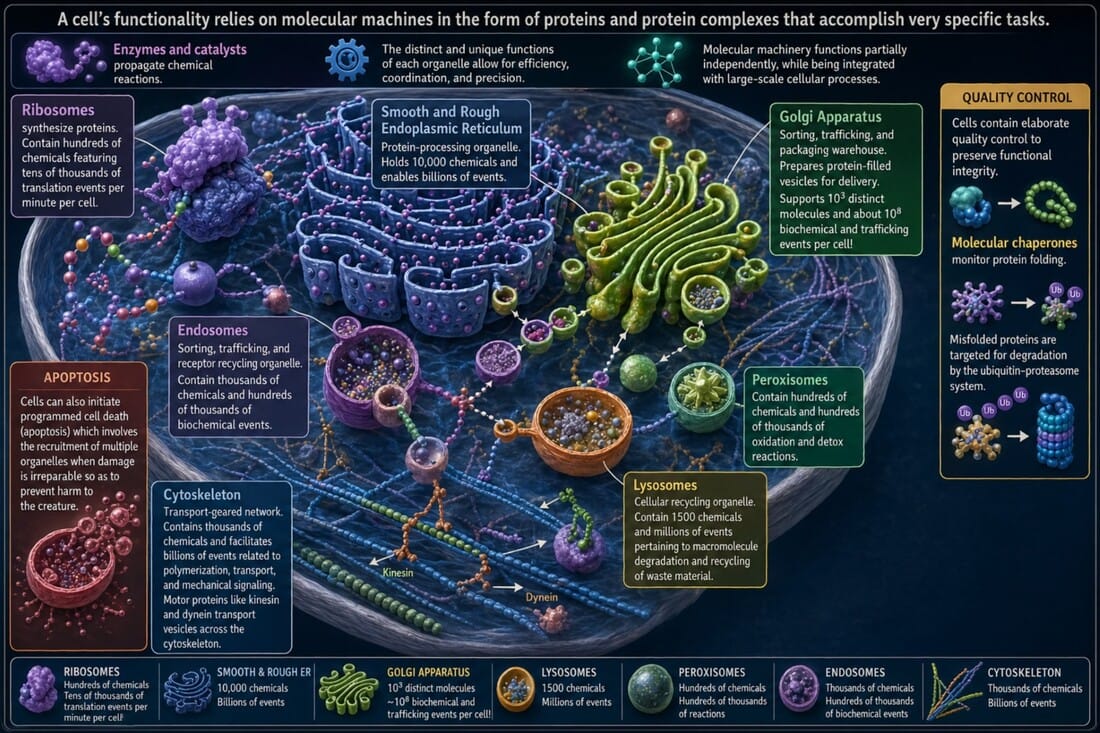
A cell’s functionality relies on molecular machines in the form of proteins and protein complexes that accomplish very specific tasks. For example, enzymes and catalysts propagate chemical reactions. The distinct and unique functions of each organelle allow for efficiency, coordination, and precision. Molecular machinery functions partially independently, while being integrated with large-scale cellular processes. Ribosomes, which synthetize proteins, contain hundreds of chemicals featuring tens of thousands of translation events per minute per cell. Cells contain elaborate quality control to preserve functional integrity. Molecular chaperones monitor protein folding and misfolded proteins are targeted for degradation by the ubiquitin-proteasome system. The protein-processing Smooth and Rough Endoplasmic Reticulum holds 10,000 chemicals and enables billions of events. The Golgi Apparatus, as a sorting, trafficking, and packaging warehouse, prepares protein-filled vesicles for delivery. The Apparatus supports 103 distinct molecules and about 108 biochemical and trafficking events per cell! Cells can also initiate programmed cell death (apoptosis) which involves the recruitment of multiple organelles when damage is irreparable so as to prevent harm to the creature. The cellular recycling Lysosomes contain 1500 chemicals and millions of events pertaining to macromolecule degradation and recycling of waste material. Peroxisomes contain hundreds of chemicals and hundreds of thousands of oxidation and detox reactions. Endosomes, the sorting trafficking and receptor recycling organelle, contain thousands of chemicals and hundreds of thousands of biochemical events. The transport-geared cytoskeleton contains thousands of chemicals and facilitates billions of events related to polymerization, transport, and mechanical signaling. For example, motor proteins like kinesin and dynein transport vesicles across the cytoskeleton.
Plasma Membrane
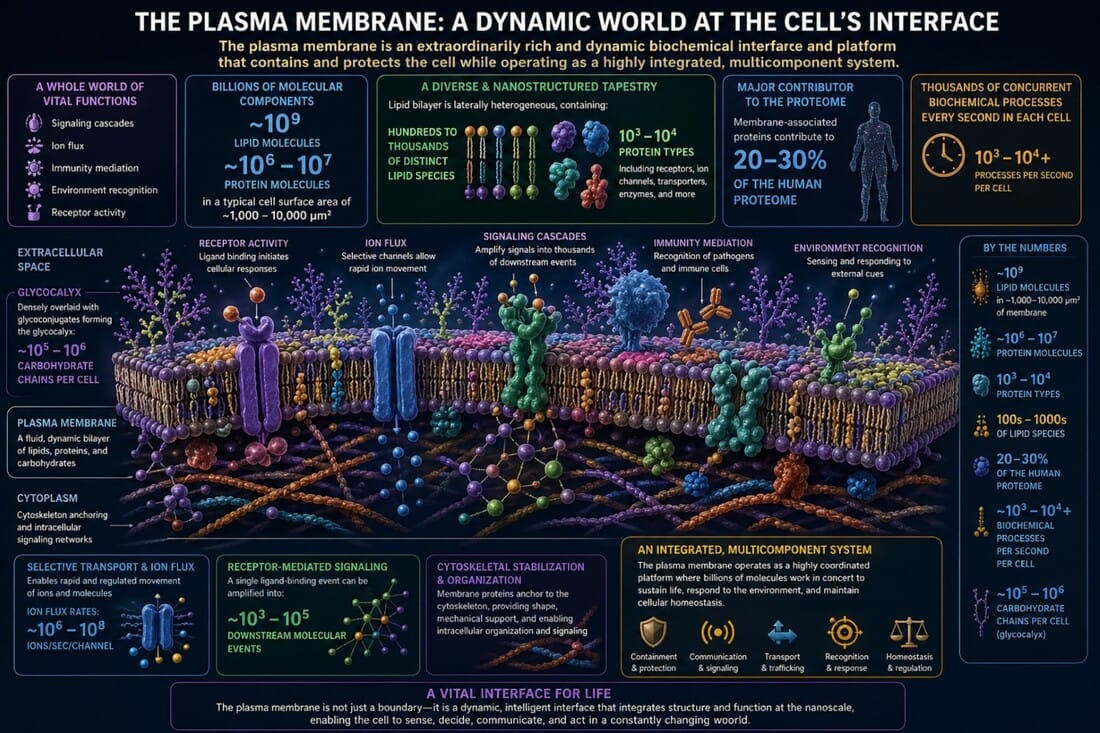
The plasma membrane is a whole “world” that is host to signaling cascades, ion flux, immunity mediation, environment recognition, and receptor activity. This outermost membrane not only contains and protects the cell, but operates individually as a highly integrated, multicomponent system with billions of molecular components and millions of simultaneous biochemical events. The plasma membrane is an extraordinarily rich and dynamic biochemical interface and platform consisting of 109 lipid molecules and 106-107 protein molecules in the typical cell surface area of about 1,000-10,000 μm². The lipid bilayer is a laterally heterogeneous and nanostructured tapestry containing hundreds to thousands of distinct lipid series and 103-104 protein types including receptors, ion channels, transporters, and enzymes. Membrane-associated proteins contribute to 20-30% of the human proteome. The membrane facilitates thousands of concurrent biochemical processes each second in each cell. For example, selective transport allows ion fluxes around 106-108 ions/sec/channel and receptor-mediated signaling cascades amplify a single ligand-binding event into 103-105 downstream molecular events and cytoskeletal stabilization. Furthermore, the extracellular surface is densely overlaid with glycoconjugates which form the glycocalyx which consists of 105-106 carbohydrate chains per cell.
Who being the brightness of his glory, and the express image of his person, and upholding all things by the word of his power, when he had by himself purged our sins, sat down on the right hand of the Majesty on high
Communication
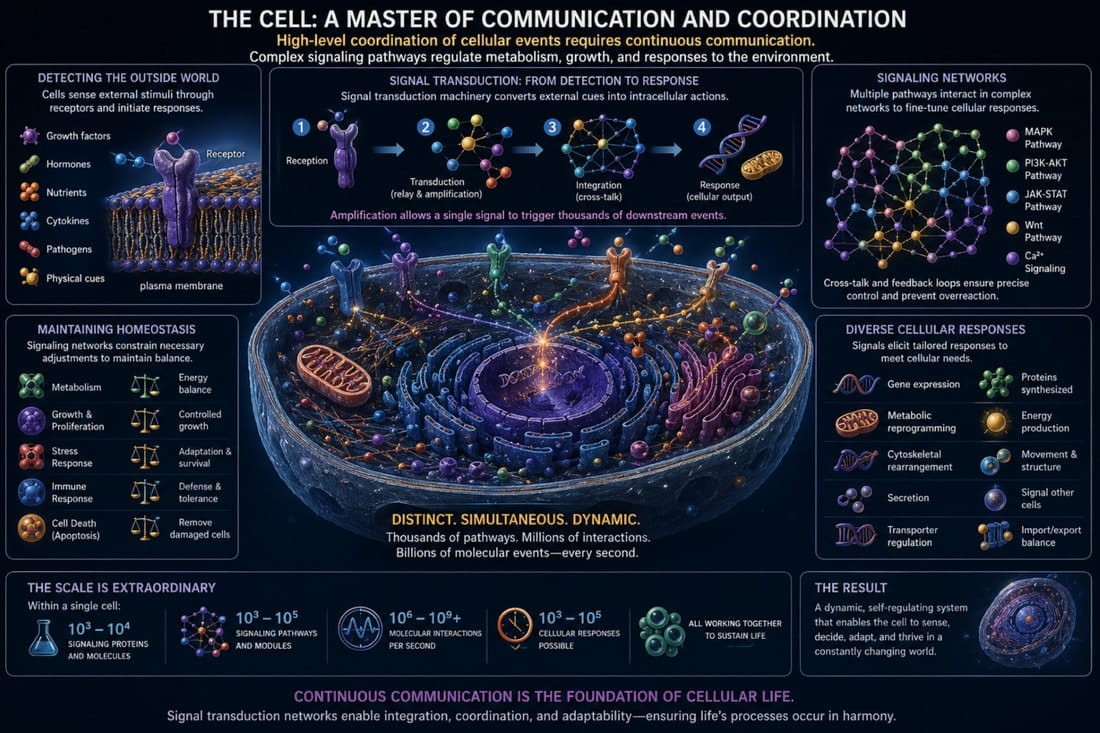
Furthermore, this high-level coordination of cellular events requires continuous communication. Complex signaling pathways regulate metabolism, growth, and responses to the environment. Signal transduction cellular machinery enables cells to detect external stimuli and initiate downstream intracellular events. Signaling networks constrain necessary adjustments to maintain homeostasis. The scale of dynamic processes which occur distinctly and simultaneously within a cell is breathtaking.
O the depth of the riches both of the wisdom and knowledge of God! how unsearchable are his judgments, and his ways past finding out! For who hath known the mind of the Lord? or who hath been his counsellor? Or who hath first given to him, and it shall be recompensed unto him again? For of him, and through him, and to him, are all things: to whom be glory for ever. Amen
References
Alberts, B., Johnson, A., Lewis, J., Morgan, D., Raff, M., Roberts, K., & Walter, P. (2015). Molecular biology of the cell (6th ed.). Garland Science.
Elmore, S. (2007). Apoptosis: A review of programmed cell death. Toxicologic Pathology, 35(4), 495–516.
Lodish, H., Berk, A., Kaiser, C. A., Krieger, M., Scott, M. P., Bretscher, A., Ploegh, H., & Amon, A. (2021). Molecular cell biology (9th ed.). W.H. Freeman.
Nelson, D. L., & Cox, M. M. (2021). Lehninger principles of biochemistry (8th ed.). W.H. Freeman.
Walker, J. E. (2013). The ATP synthase: The understood, the uncertain and the unknown. Biochemical Society Transactions, 41(1), 1–16.
Alberts, B., Johnson, A., Lewis, J., Morgan, D., Raff, M., Roberts, K., & Walter, P. (2022). Molecular biology of the cell (7th ed.). W. W. Norton & Company.
Lodish, H., Berk, A., Kaiser, C. A., Krieger, M., Bretscher, A., Ploegh, H., Amon, A., & Scott, M. P. (2021). Molecular cell biology (9th ed.). W. H. Freeman and Company.
Ulf Simons, K., & Evan A. Sorkin, A. (2000). Lipid rafts and signal transduction. Nature Reviews Molecular Cell Biology, 1(1), 31–39. https://doi.org/10.1038/35036052
Satyajit Mayor, S., & Maxime Rao, M. (2004). Rafts: Scale-dependent, active lipid organization at the cell surface. Traffic, 5(4), 231–240. https://doi.org/10.1111/j.1600-0854.2004.00168.x
Ronald N. McIntosh, R., & Thomas Kirchhausen, T. (2016). Mechanisms of endocytosis. Annual Review of Biochemistry, 85, 719–742. https://doi.org/10.1146/annurev-biochem-060815-014438
Erwin Neher, E., & Bert Sakmann, B. (1992). The patch clamp technique. Scientific American, 266(3), 44–51.