The Revival of King Solomon!
Article #17 on Revival
A Personal Testimony of Public Confession: Ecclesiastes 1:1-3, 12
the Preacher
the Preacher
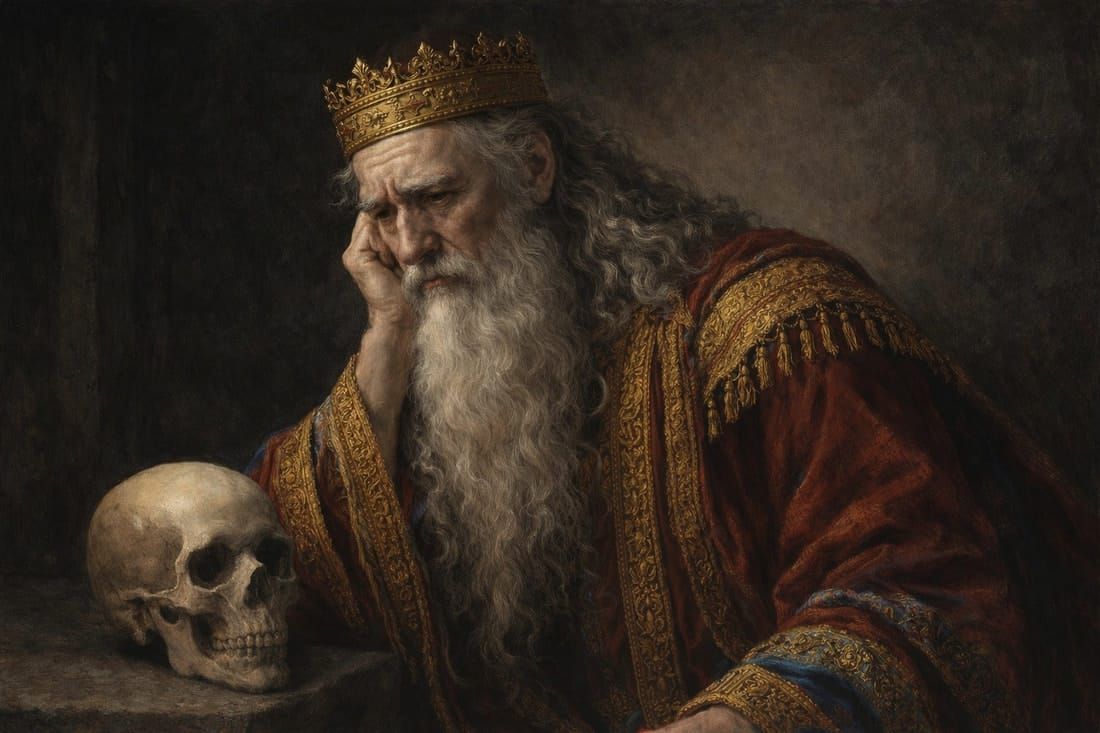
“The Preacher” needed no introduction. No man had ever risen to so great a height of earthly glory like King Solomon (1 Kings 9:10-10:29), only to become totally engrossed in idolatry and paganism in the latter part of his life (1 Kings 11:1-13). With a staggering 700 wives & 300 concubines (1 Kings 11:1-3), the temptation became too great for him (Eccl. 7:26).
What’s worse is that all of Israel witnessed the King’s shocking degeneration in his old age. Of course, the citizens of Israel were morally damaged in the process! This happens every time the Preacher falls into sin. While the faithful remnant of Israel yearned for any explanation at all about what happened, the offended little ones of society needed an explanation if they were going to return to the old paths of true religion (Jer. 6:16; Matt. 18:6-7; Eccl. 10:1).
Upon Solomon’s repentance and restoration, something needed to be said to the nation. The Ecclesiastes of the ecclesia needed to publicly confess his sins and give glory to God, so Solomon took pen and paper… and wrote the Book of Ecclesiastes. This is how the infamous tale comes to an end! God moved the Preacher to share the intimate details of how he backslid, and why, to prevent others from following the odious example of Solomon in recent years.
Vanityvanitiesvanityvanitiesvanity
correctreproveevilbitter
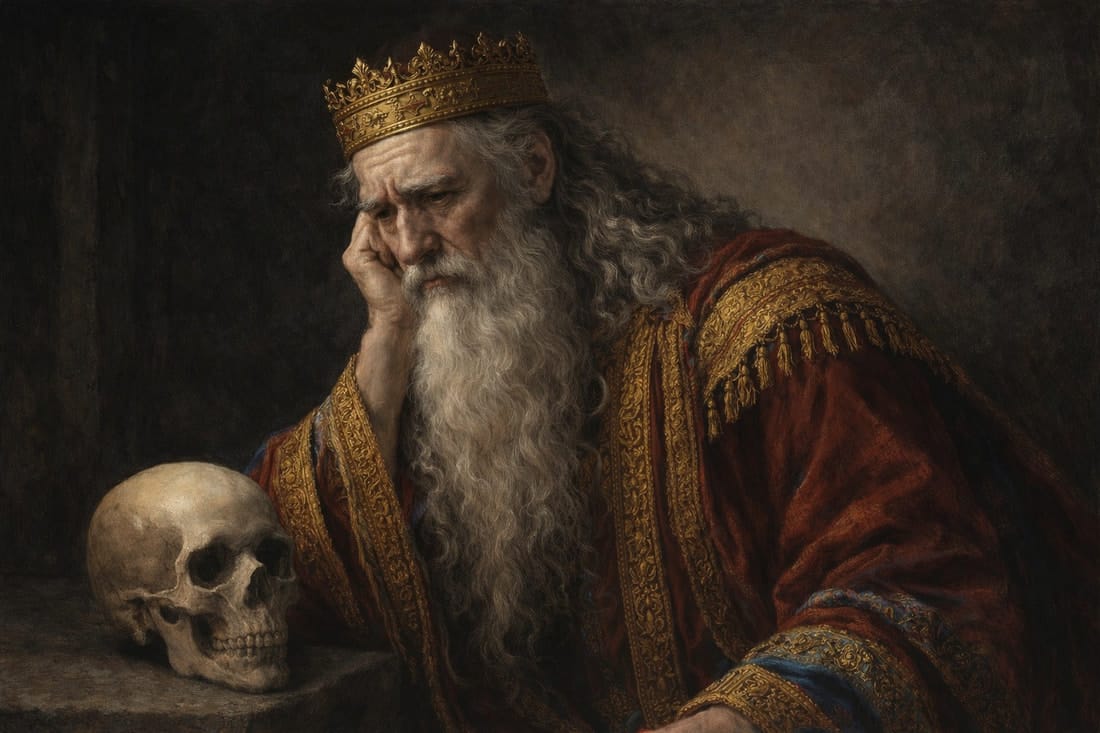
Divine benevolence is pleased to make happy sinners sadder with time (Jer. 2:19, 2 Cor. 7:8-10). Solomon as a backslider is no exception. Hence, the outburst: “Vanity of vanities…all is vanity.” (Eccl. 1:2)! Solomon spoke these words with much emotion. Like a man fastened with cords and desperate to break free, Solomon struggled to escape a painful sense of vanity in every aspect of earthly life (Prov. 5:22, 11:3, 5). Confessedly, he was feeling “vexation of spirit”, “grief”, “sorrow”, “despair”, & overwhelming restlessness. Why? Because Solomon felt that the lives of mortal men are filled with “evil” and “sore travail” to become profitable, only for death to suddenly rob them of what they toiled so hard to gain. Therefore, in the cry, “all is vanity!”, Solomon was expressing his hatred for life itself as a mortal man on a collision course with death (Eccl. 2:17).
profitlabour
One can only imagine the complex and ingenious reflections of Solomon on a day-to-day basis in this long season of miserable apostasy, if the Book of Ecclesiastes is a survey of the ongoing struggle he experienced within. Putting things in perspective, when the wisest man on earth goes on a godless philosophical tirade about life, while staring at the grave, it’s no surprise that the Hebrew word for “vanity” appears 38 times in the Book of Ecclesiastes. If Solomon wasn’t living in sin, he wouldn’t have been so bothered by death.
God spiritually reveals to the righteous those labors which certainly do profit (1 Cor. 2:14). A simple comparison of Ecclesiastes 1:2-3 and 1 Corinthians 15:58 proves this much. In other words, if Solomon was speaking on behalf of the righteous, instead of from the vantage point of a sinner, then the thesis of his speech could be dogmatically refuted by 1 Corinthians 15:58. Why? Because indeed all isn’t vanity for the righteous!
hadesThe sting of death is sin;forasmuch as ye know that your labour is not in vain in the Lord
Jehovah is not a God of the dead but of the living (Lk. 20:38). Even Job knew about and anticipated the Resurrection (Job 14:7-14, 19:25-27), and so did Solomon before he became a “vain” idolater and a heretic (Jer. 2:5, 2 Kings 17:5, Rom. 1:21). This sweet assurance would have changed everything (Ps. 16:9-11)! For, when looking at hades, and seeing beyond it, the LORD would have made Solomon “know that [his] labour is not in vain in the Lord” (1 Cor. 15:58). Therefore, let the reader understand: the Book of Ecclesiastes isn’t a speech for the righteous so much as it is a confession to sinners.
By way of personal testimony, Solomon will go on to disclose exactly how he became offended at God in the first place (Eccl. 2:14-16, 7:15, 8:11-15, 9:1-3). These bitter personal offences were hatched in his mind through the satanic influence of bad company corrupting his good morals (1 Kings 11:1-3, 1 Cor. 5:6, 15:33). Meanwhile, Solomon, as a backslidden sinner (Ezek. 3:20), was suffering badly under “the sting of death” (1 Cor. 15:56). Sin was poisoning his mind and wounding his spirit (Prov. 18:14), because he strayed away from the path of peace (Rom. 3:17, Lk. 19:42).
This is what Ecclesiastes teaches us: whatever is to be gained while good men become godless, will always prove to be an inestimable loss (Ps. 39:5-6, 62:9-10, 144:4, Mk. 8:36, 1 Cor. 1:20-21). Behold, the King of Jerusalem! Not even he could escape God’s righteous and impartial judgment. Therefore, a thick blanket of hopeless despair smothered Solomon like a “spirit of bondage” (Rom. 8:15). Through “fear of death” the richest and most famous man in the world was sorely displeased with life (Heb. 2:15, Rom. 8:15; Ps. 34:11-16).
Good Tidingsthebrokenheartedthe captivesthe prison mournmournbeautyashesjoymourningthe garment of praisethe spirit of heaviness
Solomon’s doleful lamentation, “vanity of vanities!”, resonates with sinners who philosophize about earthly life. Who could deny the Preachers strong reasons? Nevertheless, in an act of sovereign mercy, God changed the Preachers tune. Ultimately, Jehovah turned Solomon’s Vanity of Vanities into a Song of Songs (Song. 1:1)! This is the music of restoration. At last, according to the record of the Holy Bible: The Book of Ecclesiastes is answered by the Song of Songs. Even so will every wanderer’s dirge of lamentation be turned into a song of praise when God restores the soul (Ps. 23:3).